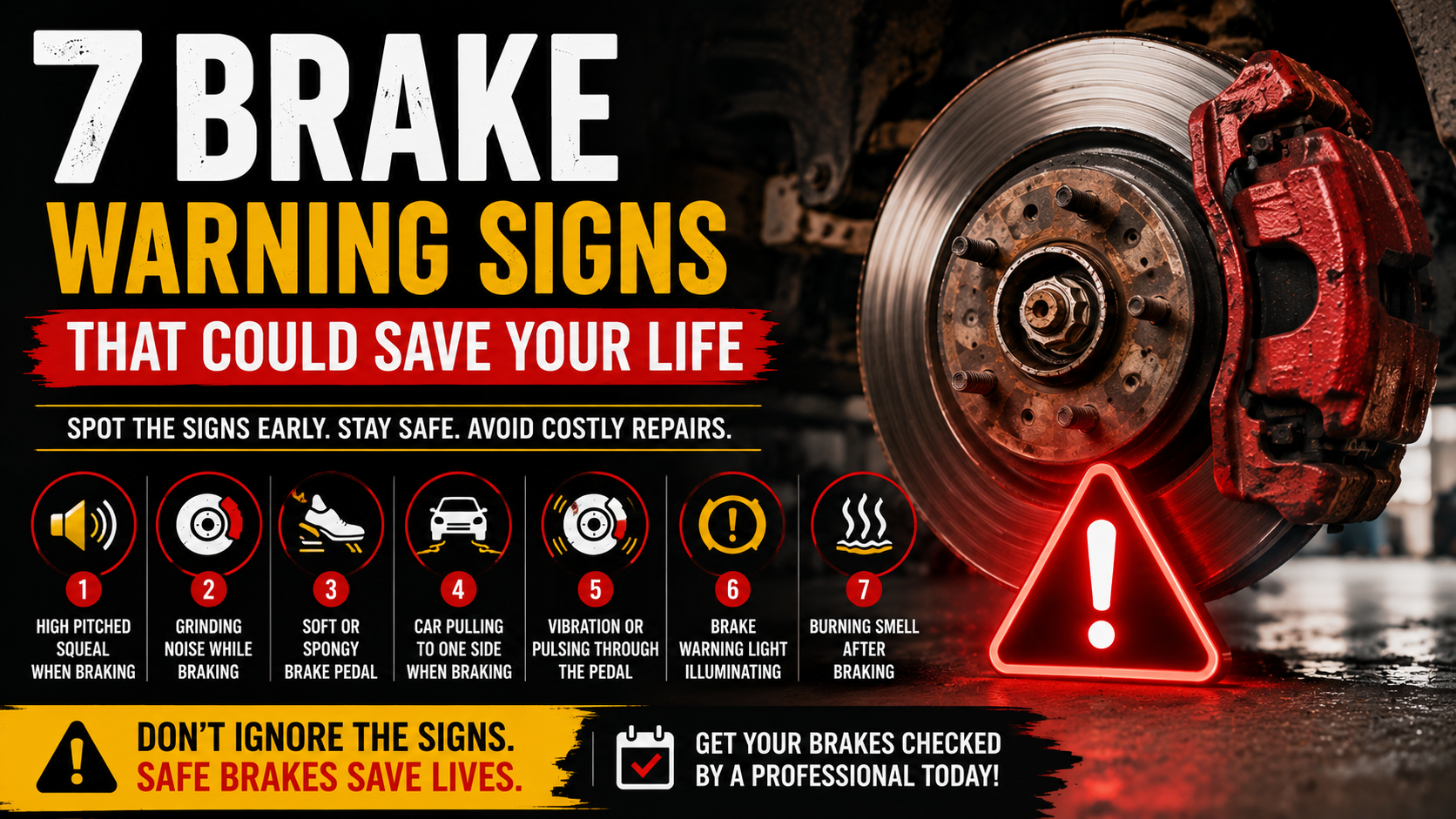
7 Brake Warning Signs That Could Save Your Life
Learn the 7 brake warning signs every driver should know, from squealing pads to a soft pedal, before they become dangerous.
Brakes are one of the few components in a car where hesitation is never a good idea. Unlike a rattling exhaust or a flickering dashboard light, a brake fault does not offer much room for a wait and see approach. The moment a car cannot stop reliably, every other feature becomes irrelevant.
The reassuring part is that brakes rarely fail without warning. In almost every case, there are clear signs beforehand, sounds, sensations, and changes in performance that indicate something needs attention. Recognising these seven warning signs early is one of the simplest ways to keep both driver and passengers safe.
1. A High Pitched Squeal When Braking
This is often the very first sign that brake pads are wearing down. Most brake pads are fitted with a small metal wear indicator designed specifically to produce a squeal once the pad material gets close to its minimum thickness.
This noise is not a fault in itself; it is a built-in warning system doing exactly what it was designed to do. If the squealing continues, it’s worth arranging a professional brake repair inspection before the pads wear down completely and damage the brake discs.
2. A Grinding Noise While Braking
If squealing is the early warning, grinding is the urgent one. A grinding sound usually means the brake pad has worn away completely, leaving metal to grind directly against the brake disc.
This is a significant concern for two reasons. First, it dramatically reduces braking effectiveness. Second, it causes damage to the disc itself, turning what would have been a simple pad replacement into a more involved and costly repair involving both pads and discs.
3. A Soft or Spongy Brake Pedal
A brake pedal that feels different underfoot, softer, spongier, or requiring more pressure than usual, points toward an issue within the braking system itself rather than the pads or discs.
Common causes include:
- Air trapped within the brake lines
- A leak in the brake fluid system
- A fault with the master cylinder
This particular sign should be treated with real urgency. A spongy pedal can mean reduced stopping power exactly when it is needed most, and it often develops gradually enough that drivers adjust to it without realising how much it has changed.
4. The Car Pulling to One Side When Braking
If a car veers noticeably to the left or right under braking, rather than stopping in a straight line, this usually indicates uneven wear or a fault affecting one side of the braking system more than the other.
Possible causes include:
- A stuck or seized brake caliper on one side
- Uneven pad wear between the two front wheels
- Contamination on one brake disc, often from oil or grease
This symptom affects control significantly, particularly during emergency braking, and is worth having checked promptly rather than compensating for it through steering correction.
5. Vibration or Pulsing Through the Brake Pedal
A pulsing sensation felt through the pedal, especially during braking from higher speeds, often points to warped brake discs. Heat builds unevenly across the disc surface over time, particularly after repeated hard braking, and this uneven surface translates into a vibration felt underfoot.
This is a slightly different symptom to general steering vibration, since it appears specifically during braking rather than constantly while driving. Left unaddressed, warped discs continue to worsen, extending stopping distances and increasing wear on surrounding components.
6. The Brake Warning Light Illuminating
Modern vehicles are equipped with sensors that monitor brake fluid levels, pad wear, and system pressure. When the brake warning light appears on the dashboard, it should never be treated as optional information.
This light can indicate several things, from a simple low fluid level to a more serious pressure imbalance within the system. A quick check clarifies which it is, and addressing it early is far preferable to discovering the cause through reduced braking performance on the road.
7. A Burning Smell After Braking
A sharp, acrid smell following repeated or heavy braking, particularly after a long descent, often indicates the brakes are overheating. This can happen if a caliper is sticking, causing the pad to remain in continuous contact with the disc even when the brake pedal is not being pressed.
Overheated brakes lose effectiveness temporarily, a phenomenon sometimes referred to as brake fade, and continued driving in this state increases the risk of a genuine failure. If this smell appears, the safest response is to stop, allow the brakes to cool, and have the system inspected before continuing.
Why These Signs Matter More Than Most Other Faults
Many car problems develop slowly and give plenty of room for a delayed response. Brakes are different. A gradual decline in braking performance is not always obvious moment to moment, particularly in everyday driving where hard braking is rare. The real risk shows up during an emergency stop, exactly when full performance is needed and least available if a fault has been left unresolved.
This is why brake related symptoms deserve a faster response than most other warning signs a car might present.
What Regular Brake Inspections Actually Involve
Routine checks are designed to catch these seven warning signs before they become noticeable to the driver at all. A thorough inspection typically covers:
- Pad thickness across both front and rear brakes
- Disc condition, checking for scoring, warping, or excessive wear
- Brake fluid level and condition
- Caliper movement, ensuring nothing is sticking or seizing
- Overall pedal feel and responsiveness
Understanding how often brakes should be inspected helps drivers stay ahead of wear rather than reacting to it, since most brake related failures develop gradually and are entirely preventable with routine attention. These checks are also a standard part of comprehensive car servicing, and brake condition is one of the most closely examined areas during an MOT test in Aldershot, where worn pads, damaged discs, or braking imbalances can all lead to a failure.
When a Different System Might Be to Blame
Occasionally, a symptom that feels brake related actually stems from elsewhere. A hesitation or delay when slowing down, for example, can sometimes be linked to the transmission rather than the brakes themselves. Recognising the symptoms of transmission slipping can help rule this out, since the two issues can occasionally feel similar to an untrained ear, particularly a delay between pressing a pedal and the car responding as expected.
What UK Drivers Commonly Report
Across driver forums, brake squealing is one of the most frequently discussed early warning signs, with many drivers admitting they left it far longer than they should have simply because the car still stopped normally. A recurring theme involves drivers noticing a soft pedal for weeks, adjusting their braking distance instinctively, before eventually having the fault diagnosed as a fluid leak.
A common piece of advice shared within these communities is straightforward, any change in how the brakes feel, sound, or respond is worth investigating immediately, rather than waiting for the next scheduled service.
What to Do the Moment You Notice a Warning Sign
Knowing the seven signs is only half the picture. What a driver does in the moments after noticing one matters just as much, and a calm, sensible response often makes the difference between a manageable fix and a genuinely dangerous situation.
If a warning sign appears while driving, the first step is to assess how severe it feels. A faint squeal or a slightly softer pedal can usually wait until the car reaches its destination, provided the journey is short and braking still feels broadly effective. A grinding noise, a burning smell, or a pedal that suddenly sinks much further than usual is a different matter entirely, and calls for finding somewhere safe to stop as soon as reasonably possible.
A few practical steps help in this situation:
- Reduce speed gradually rather than relying on hard braking, giving the system less strain while a fault is present
- Increase following distance significantly, allowing more time and space to react
- Avoid unnecessary journeys until the issue has been checked, particularly motorway driving where stopping distances matter most
- Book an inspection promptly rather than monitoring the symptom over several more drives
- Note exactly when the symptom appears, whether that is during light braking, heavy braking, or specifically at speed, since this detail helps with faster diagnosis
It is also worth resisting the temptation to explain away a symptom simply because the car still stops eventually. Brakes operating at reduced effectiveness can still bring a car to a stop under normal conditions, which is exactly why the danger tends to reveal itself only in an emergency, when full stopping power is suddenly required and not available. Treating any of these seven signs as worth acting on immediately, rather than waiting to see if they worsen, is the single most effective habit a driver can build.
If you’re unsure whether your brakes are still safe, the experienced technicians at GForce Tyres can inspect your braking system, identify worn components, and recommend the right repairs before they become expensive or affect your MOT.
Final Thoughts
Of everything that can go wrong with a car, brakes deserve a category of their own. A delayed oil change might cost more money down the line. A shaking steering wheel might mean an uncomfortable drive. A brake fault, left unresolved, has the potential to affect something far more serious than cost or convenience.
The encouraging part of this entire list is how consistently brakes communicate before they fail. A squeal, a grind, a pedal that feels different, a pull to one side, a pulse, a warning light, a smell, each one exists as an early opportunity to intervene before the problem escalates. None of these signs require special knowledge to notice. They simply require a driver willing to take them seriously the first time they appear, rather than the third or fourth.
For drivers across Aldershot, Farnborough, Fleet, Farnham, Ash Vale, Tongham, and North Camp, the message running through every one of these seven signs is the same. Brakes are not a component to gamble on, and the small window between a warning sign and a genuine failure is exactly where safety is decided. Paying attention early, and acting without hesitation, is what turns brake maintenance from a routine chore into what it actually is, one of the most important habits in keeping every journey safe.
Frequently Asked Questions
Is it safe to drive if my brakes are squealing?
A squeal alone is usually a wear indicator rather than an immediate danger, but it should be checked soon. Continuing to drive for an extended period risks the pad wearing down completely.
How quickly do worn brake pads need replacing once squealing starts?
This varies by vehicle and driving style, but as a general guide, squealing pads should be inspected within a couple of weeks rather than left indefinitely.
Can cold weather affect brake performance?
Cold weather can cause a brief delay in brake responsiveness, particularly first thing in the morning, but this should not be confused with a genuine fault. Persistent sponginess or noise still warrants investigation.
What should I do if the brake pedal suddenly feels very different?
A sudden change, rather than a gradual one, should be treated as urgent. Stop safely if possible and have the vehicle inspected before continuing to drive.
Do all cars give the same warning signs before brake failure?
Most modern cars share similar warning systems, including wear indicators and dashboard alerts, though the exact sensitivity can vary slightly between manufacturers.